
Everything you need to know about WiFi Routers for StageWave
Choose the correct router for your band
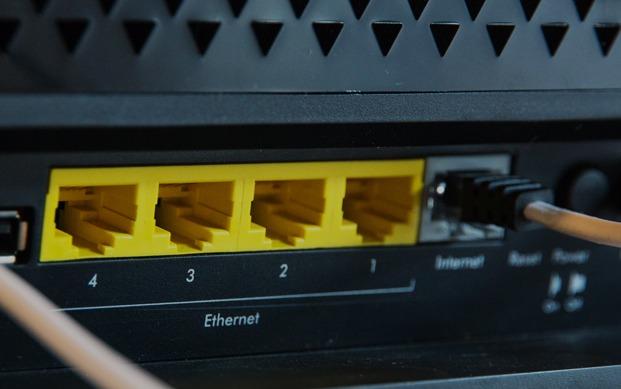
In the market, there is an infinity of routers of all types and prices. With our team, we have tested StageWave with very cheap routers up to the top of the line and after many tests, we have some conclusions we present below.
It's all about Streams
The number of devices (phones and computers) that you can connect to the system wirelessly will be determined by the number of simultaneous streams that your router can support in the 5 GHz band. MU-MIMO (multiple inputs, multiple outputs) technology, allows routers to establish multiple simultaneous wireless streams, but you should look at the router's MU-MIMO support type:
- MU-MIMO 2x2: Support for 2 devices simultaneously.
- MU-MIMO 3x3: Support for 3 devices simultaneously.
- MU-MIMO 4x4: Support for 4 devices simultaneously.
- MU-MIMO 8x8: Support for 8 devices simultaneously.
If your router is tri-band, that is, it has two 5 GHz bands, the total capacity will be the sum of the number of devices supported in each 5 GHz band. If you want to better understand how MU-MIMO technology works, check out the video "MU-MIMO Explained" from the YouTube channel "PowerCert Animated Videos".
Before purchasing a router for your band, check very carefully if the MU-MIMO support it offers meets the needs of your band.
The chipset matters more than the brand
After years of controlled A/B tests (same channel, same bandwidth, same devices, same physical location), we found a clear pattern: the routers that held stability under real load had one thing in common that didn't appear on their boxes — they used MediaTek chipsets. Qualcomm and Broadcom chipsets are optimized for browsing and video streaming, with "smart" schedulers that dynamically regroup devices. That variability is invisible while browsing, but it introduces audible artifacts in live audio. MediaTek implements MU-MIMO with fixed turns, no adaptive optimizations, and that predictability is exactly what real-time audio needs.
👉 Read the full analysis: Why StageWave recommends routers with MediaTek chipsets
You don't need to invest in the most expensive router
While it is true that with routers that are too cheap it is possible not to have good results with our monitoring system, it is not necessary to spend more than 300 USD on a router. Routers under $100 USD with the right chipset are fully capable of delivering a great experience — and can even outperform premium models with the wrong chipset.
Our historic reference is still the D-Link DIR-3040 / DIR-3060 (MediaTek), if you can find one available. For current replacements, all with MediaTek chipsets:
- 1-4 musicians: Xiaomi AX3000T or GL.iNet Beryl AX.
- 5-6 musicians: Asus TUF-AX4200.
- 7-8 musicians: GL.iNet Flint 2 or Mercusys MR90X.
For more than 8 connections, the most stable option is to use two of these routers connected in a chain. We show you how in "Using two or more routers with StageWave".
Avoid interference with other nearby routers
It is extremely important to avoid interference from nearby wireless networks. In the video "How to choose the best WiFi channel for your router" we show you how to do it.
In our research we have discovered a couple of things:
- Using 20 MHz bandwidth on the 5 GHz WiFi network will help you avoid interference and can even help increase connection stability.
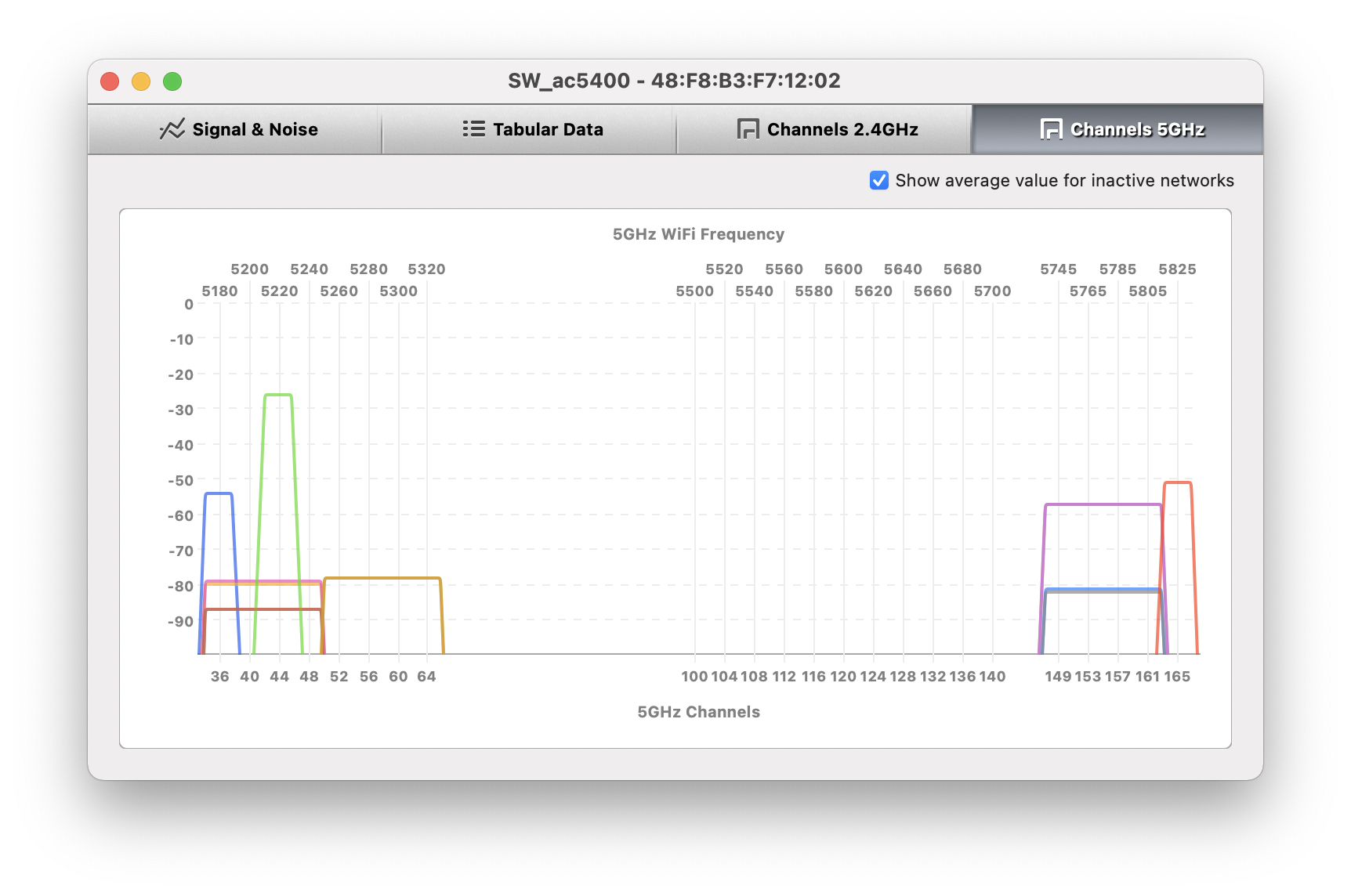
- Channel 165 is very rarely used by a WiFi network because it only supports 20 MHz bandwidth.
Therefore, if you configure your WiFi router with a 20 MHz bandwidth on channel 165 it is very likely that you will not have interference, if you look at the following image, you will see that there is interference on many channels but on channel 165 it is only found our router's network using a 20 MHz bandwidth.
WiFi 6 Routers
WiFi 6 (802.11ax) brings real advantages to StageWave only if all devices connected to the network support WiFi 6. When all phones are WiFi 6 and so is the router, the system can leverage MU-MIMO and OFDMA in their ideal regime, grouping more devices simultaneously with the same stability.
But if there's a mix of generations (some WiFi 5 phones and some WiFi 6 on the same network), the router enters a mixed-compatibility mode that degrades the performance of every device, even the modern ones. In that scenario it's preferable to force the router into WiFi 5 (802.11ac) mode so all devices operate under the same uniform, predictable regime.
If you control the devices and all of them are WiFi 6, leave WiFi 6 enabled. Otherwise, configure the router in 802.11ac-only mode.
Recommended configuration
For any MediaTek router you use, this is the configuration that has worked best for us:
- Manual fixed channel in 5 GHz: channel 165 at 20 MHz as the first choice (it rarely sees interference because it only supports 20 MHz). If that's not viable, another channel in the high band (149–161) at 20 or 40 MHz.
- OFDMA disabled.
- MU-MIMO enabled.
- Beamforming enabled.
Consider connecting some devices via network cable
As a keyboardist, I connect my phone to the router using an ethernet to USB-C adapter with my Samsung S10e. This setup provides perfect stability and allows me to use a low Buffer Size for minimal latency. It also frees up WiFi for those who need wireless connections.
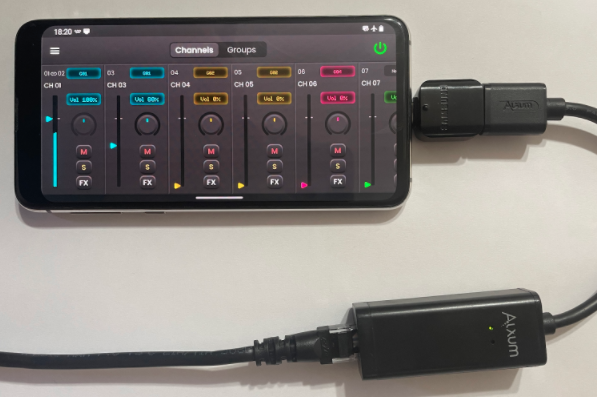
In the article “Connect your phone to the router using a ethernet cable” I tell you how to do this and what other advantages it has.
Choosing the correct router can save you time and money, but if you still have doubts about which router to choose, do not hesitate to contact us, we will be happy to help you and answer your questions.